

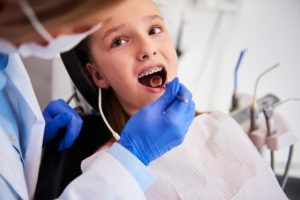

Orthodontist vs. Dentist: Aren’t They Pretty Much the Same Thing?

Cronin & Czarnik Orthodontics • August 24, 2022

The distinction between an orthodontist vs. a dentist can be kind of confusing. After all, both are dental professionals who work with teeth. And, if you’ve been looking into orthodontics, you might have even seen general dentists advertising Invisalign® treatment.

Does it really matter which doctor you see? The answer is, yes! When comparing an orthodontist to a general dentist, there are major differences in training, as well as in the focus of their practice. I’ll be covering these differences and giving you a better idea of which professional to see to meet your smile needs.

What is a General Dentist?

A general dentist diagnoses, prevents and treats a range of oral health concerns. They are your primary dental care provider and serve as the point person for your overall oral health needs, often referring you to a specialist, such as a periodontist, orthodontist or endodontist, for more complex issues.

This is similar to the medical world where you go to your general practitioner for routine screenings and certain types of care, but are referred to other medical professionals like an orthopedist, neurologist or endocrinologist for speciality care

What is an Orthodontist?

Orthodontics and dentofacial orthopedics is one of 12 dental specialties recognized by the National Commission on Recognition of Dental Specialties and Certifying Boards. The commission says, “Orthodontics and dentofacial orthopedics is the dental specialty that includes the diagnosis, prevention, interception, and correction of malocclusion, as well as neuromuscular and skeletal abnormalities of the developing or mature orofacial structures.”

What does that mean? An orthodontist is a specialist in diagnosing, preventing and treating malocclusion, or a “bad” bite caused by irregularities of the teeth and jaw. We are also well versed in the entire chewing system, which includes the teeth, jaw, nerves, temporomandibular joints (TMJ) and muscles, as well as in orofacial (relating to the mouth and face) development.

As an Arvada, CO orthodontist, like most orthodontists, I generally refer to myself as an orthodontist, but dentofacial orthopedics is also part of the specialty. Dentofacial orthopedics means using appliances to guide jaw growth in growing patients. Because we’re specialists, Dr. Scott Czarnik and I focus on only orthodontics and dentofacial orthopedics at our practice.

Orthodontist vs. Dentist: Educational Requirements

As we noted, orthodontists focus only on orthodontics, while general dentists focus on your overall oral health. The other big difference is in our education, or training. Orthodontists are dentists and we go to dental school, but we complete two to three additional years of speciality training to become a certified specialist in orthodontics and dentofacial orthopedics.

How long does it take to become an orthodontist? 10 to 11 years after high school. Yup, it’s a whole lot of schooling, but it’s during our speciality training in an orthodontic residency program that we learn the intricacies of aligning the teeth and jaw.

Educational Requirements to Become a General Dentist:

  • High school diploma
  • Bachelor’s degree from a college or university
  • Doctorate degree in dental medicine or dental surgery (DMD or DSD) from an accredited dental school

Educational Requirements to Become an Orthodontist:

  • High school diploma
  • Bachelor’s degree from a college or university
  • Doctorate degree in dental medicine or dental surgery (DMD or DSD) from an accredited dental school
  • Two to three years of speciality training in an orthodontic residency program, resulting in a certificate in orthodontics and/or master’s degree

Orthodontic residency programs are super competitive, averaging one spot for every 15 applicants. After graduating from dental school at the University of Illinois-Chicago, I was chosen to attend orthodontic residency at University of North Carolina, while Dr. Czarnik was selected for the residency program at University of Minnesota.

During residency, we both worked full days treating actual patients while being closely supervised. We also had to complete coursework and fulfill lab requirements, as well as study for exams. Residency is intense, but incredibly rewarding! Upon completing our residencies, Dr. Czarnik and I received our certificate in orthodontics and dentofacial orthopedics, plus our Master of Science degrees.

What Does a Dentist Do?

A general dentist usually offers:

  • Dental exams
  • Dental cleanings
  • Diagnostics and x-rays
  • Oral cancer screenings
  • Preventative treatment, such as fluoride varnish and dental sealants
  • Education (i.e., diet counseling, homecare, etc.)
  • Treatment for cavities, infection, mild gum disease and other oral diseases
  • Restorative care, including dental fillings, crowns and bridges
  • Cosmetic treatment, such as dental veneers and teeth whitening

Some general dentists are allowed to provide certain specialty services like Invisalign treatment. However, the training they receive to perform these treatments is much less in depth than specialty training.

What Does an Orthodontist Do?

So, what does an orthodontist do? At Cronin & Czarnik Orthodontics in North Denver, some of the main services we offer include:

  • Growth and development check-ups for children with a mix of baby teeth and permanent teeth ( the American Association of Orthodontists recommends kids have their first orthodontic evaluation no later than age 7)
  • Diagnostics, including digital x-rays, iCAT 3D imaging and iTero digital scanning
  • Phase 1 orthodontic treatment, also known as early interceptive orthodontic treatment, that focuses on guiding jaw growth with appliances(dentofacial orthopedics) and/or encouraging the permanent teeth to erupt into their correct places
  • Braces treatment with metal braces, self-ligating braces and clear braces for children, teenagers and adults
  • Invisalign and Invisalign Teen treatment for teens and adults
  • Surgical orthodontics(combining orthodontic treatment with corrective jaw surgery to treat severe skeletal misalignment in mature patients)
  • Retainers

Aside from using appliances like braces and Invisalign to straighten the teeth and align the bite, an orthodontist is also an excellent resource for problems, such as temporomandibular joint (TMJ) dysfunction and oral habits, including prolonged thumb sucking and tongue thrust.

What is a Board-Certified Orthodontist?

Being the go-getters we are, both Dr. Czarnik and I are certified by the American Board of Orthodontics. To achieve this distinction, after finishing our residencies, we voluntarily completed hundreds of extra hours of preparation and education, written exams and clinical exams to show that we’re able to provide the highest level of patient care. We have to renew our certification every 10 years, which highlights our commitment to continuing education.

Why Should You Visit an Orthodontist to Straighten Your Teeth?

First, I want to start by saying that I love dentists! In fact, dentists refer a lot of patients to our practice. Your general dentist plays an integral role in keeping your mouth healthy and free of disease and you’ll continue to see them throughout your orthodontic treatment.

But, the truth is, if you want to straighten your teeth, it’s important to visit a certified specialist in orthodontics for care (bonus points if they’re a board-certified orthodontist). Though some general dentists have done Invisalign training, they didn’t complete a residency program. A few weekend courses on Invisalign is a lot different than the 5,000+ hours spent in an orthodontic residency learning the biomechanics of the bite and how to safely and effectively straighten the teeth in a way that promotes optimal oral health.

Another point to keep in mind is that orthodontic treatment can permanently change your smile and facial structure. A specialist can ensure these changes are positive ones. Dr. Czarnik and I rely on our training to design smiles that complement each patient’s lips, profile and facial features. This requires the ability to use orthodontic technology and advanced techniques, which is why we complete 40 additional hours of lectures and training on specific techniques and new technology every year.

Orthodontics really is an art and a science and goes beyond simply moving your teeth. Sometimes, inexperienced providers fix one or two crooked teeth but neglect the big picture like the bite and other key factors in healthy occlusion. An orthodontist is an expert in considering the relationship between your upper and lower teeth (bite), creating harmony in your entire chewing system, and striking the perfect balance of aesthetics and function.

The Bottom Line:

  • General dentists focus on patients’ overall oral health. Orthodontists are specialists who focus solely on orthodontics and dentofacial orthopedics.
  • Both dentists and orthodontists go to dental school. While general dentists can start practicing immediately after earning their doctorate degree, orthodontists complete two to three more years of speciality training in an orthodontic residency program. There, they receive in-depth education and experience in diagnosing, preventing and treating irregularities of the teeth and jaw in patients of all ages.
  • For preventative dental care, concerns like tooth decay or referrals to dental specialists, visit your general dentist. If you’re considering straightening your teeth, visit an orthodontist. Our training makes us uniquely positioned to use appliances to help you achieve a beautiful, functional smile.

Schedule a Free Consultation With a Westminster, CO Orthodontist

Now that you know why a certified specialist in orthodontics is your best option for aligning your teeth and bite, are you wondering, “How do I find an orthodontist near me?” If you’re in the North Denver area, we have you covered here at Cronin & Czarnik Orthodontics in Westminster, CO.

Schedule a complimentary consultation at our practice today. As board-certified orthodontists, Dr. Czarnik and I have the training and experience to diagnose your orthodontic concerns and create a personalized treatment plan to help you achieve your best smile. And, because we stay up-to-date on the latest technology, treatment will be convenient, efficient and comfortable.

Share this article

Recent Posts

By Cronin & Czarnik Orthodontics July 9, 2026
Learn why wearing your retainer for life helps prevent teeth from shifting after braces or Invisalign. Protect your smile with expert orthodontic advice.

June 19, 2026
Looking Beyond the Latest Acronym If you've been researching adult palate expansion online, you've probably come across a confusing list of terms: MARPE MASPE MSE Custom MARPE FME Hybrid Expanders Bone-Borne Expanders It can seem like every few months there is another acronym claiming to be the "new" or "better" way to expand the upper jaw. So what's the difference? The answer is surprisingly simple: Most of these names describe very similar concepts, and often the differences are in appliance design or how the appliance is activated—not an entirely new treatment philosophy. At Cronin & Czarnik Orthodontics, we've been providing skeletal expansion for years. More importantly, we were early adopters of slow activation protocols long before the term "MASPE" became popular. Our philosophy has always been to treat the biology—not the buzzwords. What is MARPE? MARPE stands for Mini-Implant Assisted Rapid Palatal Expansion . Despite the word "rapid," MARPE simply refers to an expander that is supported by temporary mini-implants (TADs) placed in the palate. Unlike traditional expanders that rely mostly on the teeth, MARPE transfers much of the expansion force directly into the upper jaw bone, making it possible to successfully expand many older teenagers and adults who have completed growth. MARPE has transformed orthodontics by allowing many patients to avoid more invasive surgical procedures while achieving true skeletal expansion. Then What is MASPE? MASPE generally stands for Mini-Implant Assisted Slow Palatal Expansion . Here's the important part: MASPE is not a completely different appliance. In most situations, it is simply a MARPE appliance that is activated differently. Instead of prescribing aggressive daily turns, the appliance is activated much more gradually, allowing the surrounding bone, sutures, and facial structures additional time to adapt. In other words: Same appliance. Different protocol. This distinction has become increasingly recognized because clinicians have learned that many adult patients respond better to slower, more biologic expansion than the traditional "rapid" approach. We Were Using Slow Expansion Before It Had a Name One of the exciting parts of orthodontics is that techniques continue to evolve. Sometimes the science changes. Sometimes the terminology changes even faster. Long before the phrase "MASPE" became common, our office had already transitioned toward slower, more controlled activation for many patients. Why? Because our clinical experience—and the growing body of research—showed that every patient responds differently. Rather than forcing every patient into the same schedule, we individualized treatment based on: Age Bone maturity Suture response Comfort CBCT imaging Overall treatment goals Airway considerations That philosophy continues today. Why We Prefer a Slow, Customized Approach Every patient's biology is different. Some patients respond quickly. Others require more time. Some benefit from stretching protocols before active expansion. Others progress with very minimal activation. Our goal isn't simply to make the screw turn. Our goal is to achieve stable skeletal expansion while minimizing unnecessary stress on the teeth, gums, and surrounding bone. A slower protocol may offer advantages such as: Improved patient comfort Better control of tooth movement Reduced unwanted dental tipping More gradual adaptation of surrounding tissues More predictable biologic response There is no single activation schedule that works for every patient. Why Are There So Many Different Names? Orthodontics has always been full of evolving terminology. Over the past several years you've likely seen names such as: MARPE MASPE MSE FME Custom MARPE Bone-Borne Expansion Hybrid Expansion Each represents a variation in appliance design, engineering, or activation philosophy. Sometimes these innovations are meaningful. Sometimes they're primarily different ways of describing similar concepts. The most important question isn't: "Which acronym is best?" Instead ask: "Does my orthodontist have experience diagnosing the right patients and customizing treatment for my anatomy?" That question has a much bigger impact on success than the letters attached to the appliance. Expansion is About More Than Creating Space Many people assume expansion is only used to make room for crowded teeth. While that is certainly one benefit, widening a narrow upper jaw may also help: Correct crossbites Improve smile width Create room for proper tongue posture Improve bite function Support healthier nasal breathing in appropriately selected patients Potentially reduce the need for tooth extractions Every patient is unique, which is why a comprehensive evaluation—including digital scans and 3D CBCT imaging—is essential before recommending treatment. Experience Matters Adult skeletal expansion has become increasingly popular over the past decade. As with any advanced orthodontic procedure, success depends on much more than purchasing a particular appliance. It requires: Careful diagnosis Detailed 3D treatment planning Appropriate appliance selection Customized activation schedules Close monitoring throughout treatment Knowing when to speed up—or slow down—the process At Cronin & Czarnik Orthodontics, skeletal expansion is one of our areas of expertise. We've been helping both children and adults with airway-focused orthodontics and customized MARPE treatment for years, and we continue to refine our protocols as new evidence emerges. Rather than chasing the newest acronym, we focus on what has always mattered most: Providing personalized, biologically respectful treatment that gives each patient the best opportunity for a healthy, stable, and lasting result. Wondering if You're a Candidate? Whether you've heard the terms MARPE, MASPE, MSE, or another variation, the first step is the same: a comprehensive evaluation. At Cronin & Czarnik Orthodontics, we'll determine whether skeletal expansion is appropriate for you, explain your options, and develop a customized treatment plan based on your unique anatomy—not the latest trend. Schedule your complimentary consultation today to learn whether MARPE or another expansion approach is right for you.
Why Age 7 Is Oldschool Thinking: The Case for Earlier Orthodontic Evaluations
By Cronin & Czarnik Orthdontics April 10, 2026
At Cronin & Czarnik Orthodontics, we often hear the same question from parents: “When should my child first see an orthodontist?” The American Association of Orthodontists recommends that children have their first...
Close-up of a smiling mouth showing white teeth and pink lips
By Cronin & Czarnik Orthodontics March 19, 2026
At Cronin & Czarnik Orthodontics, we’ve built a reputation as one of Colorado’s leading providers of advanced airway-focused orthodontic treatments—especially MARPE (Miniscrew-Assisted Rapid Palatal Expansion). One of the most common...
Ask Me Anything About My MARPE Treatment
By Cronin & Czarnik Orthodontics February 16, 2026
An interview with Julie, age 39 — Cronin & Czarnik Orthodontics patient At Cronin & Czarnik Orthodontics, we believe the most powerful way to understand treatment is to hear directly...
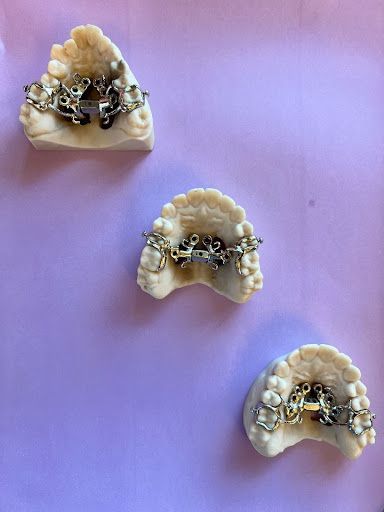
MARPE: The Greatest New Treatment in Orthodontics
By Cronin & Czarnik Orthodontics January 7, 2026
Orthodontics is evolving—and at Cronin & Czarnik Orthodontics, we are proud to be at the forefront of one of the most impactful advances the profession has seen in