

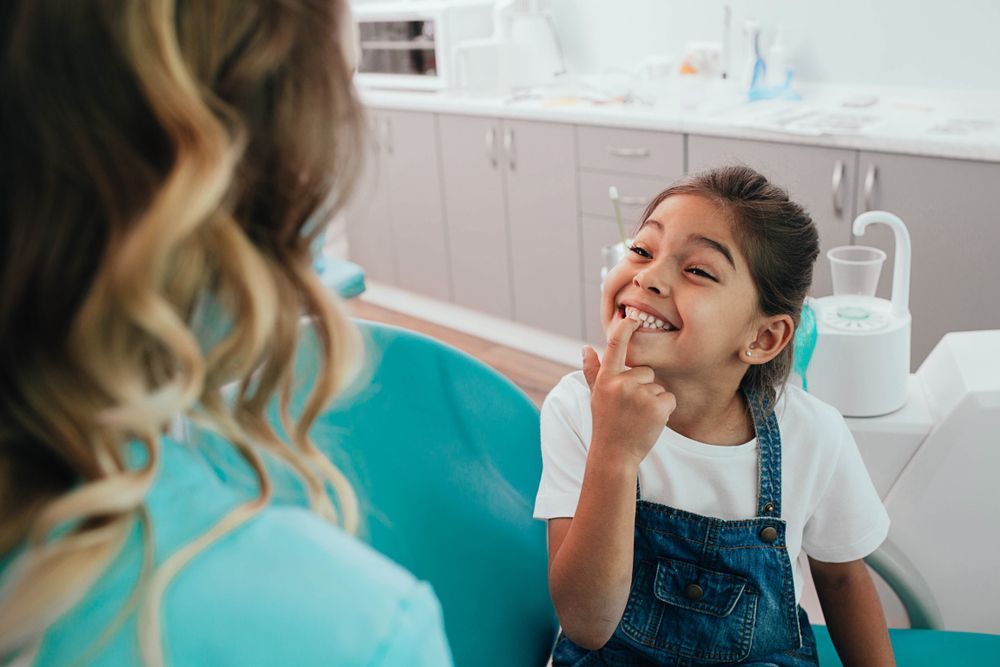

Why Do So Many Young Kids Have Braces Today?

Dr. Carolyn Cronin • February 18, 2022


When I was a teenager, I actually spent quite a few years in braces. I wasn’t alone. Most of my friends and classmates also got braces around the same time. Up until more recently, it was pretty much the norm that you started orthodontic treatment at age 12 or 13.

That’s why it can come as a surprise when you see elementary school children wearing braces or an appliance when they’re 7 or 8. In fact, one of the most common questions I get as a Westminster orthodontist is, “Why do so many young kids have braces today?” In this post, I’ll be answering that question and walking you through the basics of early orthodontic treatment. Let’s get started!


What Age Can Kids Get Braces?

Comprehensive braces treatment usually starts between the ages of 11 and 13 when kids have all of their permanent teeth. For many patients, this is the best age for braces. We can clearly see what needs to be fixed, but jaw growth isn’t complete just yet, allowing us to get more dramatic results. 

Though children can wear braces as young as 6 or 7, these early braces for kids aren’t the same as comprehensive treatment. Your child won’t wear a full set of braces for an extended period. Instead, braces are usually bonded to select teeth and stay in place for nine to 12 months. They may or may not also be paired with another orthodontic appliance.  


Why are Early Braces for Kids So Common?

Guidelines for everything change based on the latest research and studies. Just look at car seats, for example. Even 40 years ago, a lot of small children traveled in cars without one. Today, that would be unimaginable. 

The field of orthodontics is no different. As orthodontics and technology have evolved, decades of people have straightened their teeth and research has been conducted, we have more information to work with. And studies suggest that for young patients with specific dental and skeletal imbalances, early intervention with orthodontic appliances improves long-term stability and helps the patients spend less time in braces when they’re teenagers. 

A 2021 study on rapid palatal expansion (RPE), which is when we use an appliance to expand, or widen, the upper jaw, even found early treatment significantly improved young patients’ quality of life. 

In keeping with the science, recommendations have been updated, including the age kids should have an orthodontic screening. Currently, the American Association of Orthodontists (AAO) recommends that children have their first orthodontic evaluation no later than age 7.

And though it can seem like so many young kids have braces today, really, only a relatively small percentage of little ones actually need early orthodontic treatment, also called early interceptive orthodontic treatment or phase 1 orthodontic treatment . While it’s certainly more than the number of children with braces or an appliance years ago, most kids don’t require early intervention and still get braces in their teen years. 

However, when we do spot certain red flags in kids with mixed dentition (having both baby teeth and permanent teeth), which we’re able to do thanks to technology , we can now take a proactive approach and prevent problems with the permanent teeth before they even come in. 

We do this by teaming up with a child’s pediatric dentist to guide the eruption of the permanent teeth or, when absolutely necessary, intervening early with an orthodontic appliance, such as a palatal expander , limited braces or another device. This is preferable to the older approach of waiting for the permanent teeth to come in and then extracting teeth and/or having kids spend years in bulky headgear.


Why Age 7?

The AAO doesn’t recommend kids have their first orthodontist visit by age 7, because they think that’s the best age for braces. Instead, it’s because at age 7, kids have their first permanent molars, which help establish the back of the bite. At this point, Dr. Scott Czarnik and I can get an idea of how your child’s bite is shaping up and use our findings as a baseline for future exams.

We’re also able to guide eruption, which is one of the most significant benefits of early orthodontic exams. This is a complimentary service we offer to diagnose potential issues and work together with your child’s pediatric dentist or general dentist to avoid unnecessary orthodontic treatment. 

An exam at age 7 includes a panoramic x-ray, which lets us see unerupted teeth. Our job is to identify any teeth that are on the “wrong path,” such as ectopic teeth that can become impacted, or stuck under the gums. We can then usually guide eruption by having a baby tooth wiggled out at the right time. This can prevent the need for phase 1 treatment or complicated treatment later on that may involve surgery (for example, expose and bond a canine). 

In many cases, there won’t be any impending eruption problems and nothing more will happen after your child’s exam. We’ll simply keep an eye on your child’s smile by having them come in once a year. As a kids’ orthodontist in Westminster, these growth and development checkups are also complimentary. It’s a way to let us pinpoint the ideal age for braces or Invisalign Teen treatment to start.

However, if we do find specific emerging issues, especially if they’re skeletal in nature, stepping in while a child still has some baby teeth and is in a stage of rapid development, lets us much more easily direct jaw growth (dentofacial orthopedics), help the rest of the permanent teeth come in properly or stop harmful oral habits before they lead to severe problems. 


What Type of Orthodontic Problems  Require Phase 1 Orthodontic Treatment?

While we do offer kids’ orthodontics in Westminster, CO, we take a conservative approach and only recommend early treatment if there’s a clear health benefit. Early treatment is focused on function and making space and not on cosmetic issues. Again, most orthodontic concerns won’t require early orthodontic treatment. But, if an issue will become severe as a child gets older or if it’s skeletal, then early intervention could be recommended. 

Some instances where we might use an appliance or early braces for children include:

  • Fixing a crossbite that’s due to the size or position of the jaw
  • Correcting a discrepancy between the upper and lower jaw, particularly in cases of an underbite
  • Alleviating excessive crowding that will get worse and require extractions when the rest of the permanent teeth erupt
  • Closing a severe open bite that’s interfering with speaking and chewing
  • Stopping oral habits, such as prolonged thumb sucking or tongue thrust, that can impact jaw growth and teeth positioning 
  • Shifting protruding teeth back, so they won’t get damaged or knocked out


How Does Early Orthodontic Treatment Work?

Most patients who are candidates for early orthodontic treatment will have a two-phase treatment plan. In phase 1, Dr. Czarnik or I will use an orthodontic appliance or limited braces, depending on your child’s needs, to intercept the emerging issue before it becomes a full-blown problem. In general, we focus on only correcting that one problem and we aim to finish phase 1 orthodontic treatment in 12 months or less. 

Once we’ve achieved our goals, we will remove your child’s braces or appliance and your child will begin an observation period. During this time, we’ll allow the remainder of their permanent teeth to erupt. Your child will come in for check-ups every six to 12 months, so we can continue to monitor their growth and the eruption of their permanent teeth. These visits are complimentary and by keeping a close watch, we can help avoid more complicated treatment. 

After the observation period comes phase 2 orthodontic treatment, which is when your child will wear braces or Invisalign Teen to shift the permanent teeth into their ideal positions and finetune the bite. When do kids get braces or Invisalign Teen? Phase 2 usually begins between ages 11 and 13 when all of the permanent teeth are in. 


What are the Benefits of Early Orthodontics?

When early orthodontic treatment is necessary, the benefits can be huge. Phase 1 treatment can:

  • Guide jaw growth
  • Correct crossbites
  • Create facial symmetry
  • Shift protruding teeth out of harm’s way
  • Relieve crowding to help the permanent teeth erupt as straight as possible and avoid issues like impaction (tooth gets stuck under the bone)
  • Prevent the need for extractions
  • Prevent the need for corrective jaw surgery
  • Make treatment in the teenage years faster, easier and more affordable
  • Encourage proper chewing and speaking
  • Break oral habits like thumb sucking and tongue thrust
  • Boost kids’ confidence and self-esteem!


How Do You Know if Your Child Needs Interceptive Orthodontics?

Your pediatric dentist might see an issue with your child’s dental or facial development and recommend that you visit an orthodontist. Yet, regardless of whether or not your dentist sees a problem, you should schedule your child’s first orthodontist appointment by age 7. 

As board-certified orthodontists, Dr. Czarnik and I are trained to spot subtle problems with jaw growth and teeth that might otherwise go undetected. Visiting an orthodontist is the only way to know for certain whether or not your child needs interceptive orthodontic treatment. 

What Happens at this First Visit?

When you come in for a consultation with a Westminster kids’ orthodontist at our practice, you’ll:

  • Receive a warm welcome from our friendly front desk staff. 
  • Get to kick back and relax in our bright, modern reception area if you arrive early.
  • Head back to the treatment area. A team member will show you around and then take complimentary x-rays, including a panoramic x-ray, and photos of your child’s smile. 
  • Meet with me or Dr. Czarnik. We’ll examine your child and talk with you about your concerns and needs. Using our findings and your child’s diagnostic records, we’ll determine an accurate diagnosis (if there is one) and personalized treatment recommendations. We’ll walk you through everything step by step and answer any questions you have. 
  • Talk with a team member about the logistics. They’ll go over your insurance coverage, the cost of treatment and our flexible payment plans. If you decide to move forward, we’ll schedule your child to have their appliance placed. 


How Much Do Phase 1 Appliances or Braces for Kids Cost?

The cost of braces or another appliance for kids will depend on the severity of the problem, what type of appliance we’re using and the length of treatment. Often, correcting the problem in childhood will make any later treatment more affordable. 

When you bring your child in for a consultation at Cronin & Czarnik Orthodontics in the Denver area, once we have a diagnosis and personalized treatment recommendations, we’ll present you with the cost of early orthodontic treatment upfront, so there are no surprises.

If you have insurance that covers appliances or braces for kids, this can really reduce how much you pay out of pocket. We also offer a range of financing options, including in-office, no-interest financing to help you break up the cost of treatment into low monthly payments. 


Connect With a Kids’ Orthodontist in Westminster, CO

If you’re looking for a Colorado orthodontist for kids, look no further! At Cronin & Czarnik Orthodontics, we treat patients of all ages, including children. As a kid-friendly orthodontist in Westminster, we’ll put your little one at ease and make these early visits fun and engaging. Book a free consultation for your child online  or by calling us at (303) 428-3613 today! 

Share this article

Recent Posts

June 19, 2026
Looking Beyond the Latest Acronym If you've been researching adult palate expansion online, you've probably come across a confusing list of terms: MARPE MASPE MSE Custom MARPE FME Hybrid Expanders Bone-Borne Expanders It can seem like every few months there is another acronym claiming to be the "new" or "better" way to expand the upper jaw. So what's the difference? The answer is surprisingly simple: Most of these names describe very similar concepts, and often the differences are in appliance design or how the appliance is activated—not an entirely new treatment philosophy. At Cronin & Czarnik Orthodontics, we've been providing skeletal expansion for years. More importantly, we were early adopters of slow activation protocols long before the term "MASPE" became popular. Our philosophy has always been to treat the biology—not the buzzwords. What is MARPE? MARPE stands for Mini-Implant Assisted Rapid Palatal Expansion . Despite the word "rapid," MARPE simply refers to an expander that is supported by temporary mini-implants (TADs) placed in the palate. Unlike traditional expanders that rely mostly on the teeth, MARPE transfers much of the expansion force directly into the upper jaw bone, making it possible to successfully expand many older teenagers and adults who have completed growth. MARPE has transformed orthodontics by allowing many patients to avoid more invasive surgical procedures while achieving true skeletal expansion. Then What is MASPE? MASPE generally stands for Mini-Implant Assisted Slow Palatal Expansion . Here's the important part: MASPE is not a completely different appliance. In most situations, it is simply a MARPE appliance that is activated differently. Instead of prescribing aggressive daily turns, the appliance is activated much more gradually, allowing the surrounding bone, sutures, and facial structures additional time to adapt. In other words: Same appliance. Different protocol. This distinction has become increasingly recognized because clinicians have learned that many adult patients respond better to slower, more biologic expansion than the traditional "rapid" approach. We Were Using Slow Expansion Before It Had a Name One of the exciting parts of orthodontics is that techniques continue to evolve. Sometimes the science changes. Sometimes the terminology changes even faster. Long before the phrase "MASPE" became common, our office had already transitioned toward slower, more controlled activation for many patients. Why? Because our clinical experience—and the growing body of research—showed that every patient responds differently. Rather than forcing every patient into the same schedule, we individualized treatment based on: Age Bone maturity Suture response Comfort CBCT imaging Overall treatment goals Airway considerations That philosophy continues today. Why We Prefer a Slow, Customized Approach Every patient's biology is different. Some patients respond quickly. Others require more time. Some benefit from stretching protocols before active expansion. Others progress with very minimal activation. Our goal isn't simply to make the screw turn. Our goal is to achieve stable skeletal expansion while minimizing unnecessary stress on the teeth, gums, and surrounding bone. A slower protocol may offer advantages such as: Improved patient comfort Better control of tooth movement Reduced unwanted dental tipping More gradual adaptation of surrounding tissues More predictable biologic response There is no single activation schedule that works for every patient. Why Are There So Many Different Names? Orthodontics has always been full of evolving terminology. Over the past several years you've likely seen names such as: MARPE MASPE MSE FME Custom MARPE Bone-Borne Expansion Hybrid Expansion Each represents a variation in appliance design, engineering, or activation philosophy. Sometimes these innovations are meaningful. Sometimes they're primarily different ways of describing similar concepts. The most important question isn't: "Which acronym is best?" Instead ask: "Does my orthodontist have experience diagnosing the right patients and customizing treatment for my anatomy?" That question has a much bigger impact on success than the letters attached to the appliance. Expansion is About More Than Creating Space Many people assume expansion is only used to make room for crowded teeth. While that is certainly one benefit, widening a narrow upper jaw may also help: Correct crossbites Improve smile width Create room for proper tongue posture Improve bite function Support healthier nasal breathing in appropriately selected patients Potentially reduce the need for tooth extractions Every patient is unique, which is why a comprehensive evaluation—including digital scans and 3D CBCT imaging—is essential before recommending treatment. Experience Matters Adult skeletal expansion has become increasingly popular over the past decade. As with any advanced orthodontic procedure, success depends on much more than purchasing a particular appliance. It requires: Careful diagnosis Detailed 3D treatment planning Appropriate appliance selection Customized activation schedules Close monitoring throughout treatment Knowing when to speed up—or slow down—the process At Cronin & Czarnik Orthodontics, skeletal expansion is one of our areas of expertise. We've been helping both children and adults with airway-focused orthodontics and customized MARPE treatment for years, and we continue to refine our protocols as new evidence emerges. Rather than chasing the newest acronym, we focus on what has always mattered most: Providing personalized, biologically respectful treatment that gives each patient the best opportunity for a healthy, stable, and lasting result. Wondering if You're a Candidate? Whether you've heard the terms MARPE, MASPE, MSE, or another variation, the first step is the same: a comprehensive evaluation. At Cronin & Czarnik Orthodontics, we'll determine whether skeletal expansion is appropriate for you, explain your options, and develop a customized treatment plan based on your unique anatomy—not the latest trend. Schedule your complimentary consultation today to learn whether MARPE or another expansion approach is right for you.
Why Age 7 Is Oldschool Thinking: The Case for Earlier Orthodontic Evaluations
By Cronin & Czarnik Orthdontics April 10, 2026
At Cronin & Czarnik Orthodontics, we often hear the same question from parents: “When should my child first see an orthodontist?” The American Association of Orthodontists recommends that children have their first...
Close-up of a smiling mouth showing white teeth and pink lips
By Cronin & Czarnik Orthodontics March 19, 2026
At Cronin & Czarnik Orthodontics, we’ve built a reputation as one of Colorado’s leading providers of advanced airway-focused orthodontic treatments—especially MARPE (Miniscrew-Assisted Rapid Palatal Expansion). One of the most common...
Ask Me Anything About My MARPE Treatment
By Cronin & Czarnik Orthodontics February 16, 2026
An interview with Julie, age 39 — Cronin & Czarnik Orthodontics patient At Cronin & Czarnik Orthodontics, we believe the most powerful way to understand treatment is to hear directly...
MARPE: The Greatest New Treatment in Orthodontics
By Cronin & Czarnik Orthodontics January 7, 2026
Orthodontics is evolving—and at Cronin & Czarnik Orthodontics, we are proud to be at the forefront of one of the most impactful advances the profession has seen in
MUST READ: Debunking Orthodontic Myths
By Cronin & Czarnik Orthodontics December 5, 2025
When it comes to orthodontic care, misinformation is everywhere. Patients often come in with questions based on things they’ve “heard”—and many of those ideas are simply not true. At Cronin...